2026上半年軟考系統(tǒng)分析師第二期模考試卷(綜合知識(shí))

摘要:希賽網(wǎng)于4月25日-26日舉行了2026上半年軟考第二期模考活動(dòng),現(xiàn)將2026上半年軟考系統(tǒng)分析師第二期模考試卷(綜合知識(shí))分享給大家。有需要的同學(xué)可以在本文資料處下載模考試卷的PDF版本。
希賽網(wǎng)2026上半年軟考系統(tǒng)分析師第二期模考活動(dòng)已結(jié)束,現(xiàn)將2026上半年軟考系統(tǒng)分析師第二期模考試卷(綜合知識(shí))分享給大家。模考試卷PDF版本可在本文文首本文資料處或文末的資料下載欄目下載。
2026上半年軟考系統(tǒng)分析師第二期模考試卷(綜合知識(shí))部分內(nèi)容如下:
1、下列關(guān)于最小生成樹的敘述中,正確的是( )。
A.最小生成樹的權(quán)值之和唯一
B.所有權(quán)值最小的邊一定會(huì)出現(xiàn)在所有的最小生成樹中
C.使用Prim 算法從不同頂點(diǎn)開始得到的最小生成樹一定相同
D.使用不同算法得到的最小生成樹總不相同
2、【考生回憶版】假設(shè)隨機(jī)變量X服從均勻分布U(a,b),其中a=0,b=1,則P(X<0.5)的值是( )。
A.1/4
B.1/2
C.0
D.1
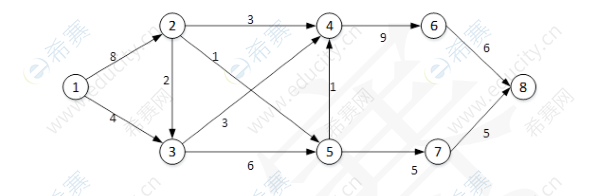
3、公園里有8個(gè)灌溉點(diǎn),標(biāo)記為①~⑧。灌溉點(diǎn)①是唯一的供水點(diǎn),各點(diǎn)之間的箭頭表示輸送水的管道和流向。箭頭邊上標(biāo)注的數(shù)字表示該管道的最大流量(單位:噸/小時(shí))。據(jù)此可知,當(dāng)管道( )關(guān)閉維修時(shí),管道網(wǎng)仍可按該最大流量值向站點(diǎn)⑧供水。
A.②->③
B.②->⑤
C.③->④
D.⑤->④
4、關(guān)于商標(biāo)與專利權(quán)的歸屬原則,以下說法正確的是( )。
A. 無論是商標(biāo)還是專利,若雙方同時(shí)申請且無法提供證據(jù)或協(xié)商不成,最終都通過抽簽方式?jīng)Q定歸屬
B. 專利權(quán)的申請遵循“先申請”原則,若雙方同日申請且協(xié)商不成,則同時(shí)駁回雙方的專利申請
C. 在商標(biāo)申請中,如果雙方同時(shí)申請且都無法提供使用證據(jù),則直接采用抽簽方式確定歸屬
D. 專利權(quán)的取得完全遵循“先使用”原則,與申請時(shí)間無關(guān)
5、某軟件公司開發(fā)了一款圖像處理軟件,并將該軟件的著作權(quán)使用許可給三家企業(yè)。其中,授予甲企業(yè)的許可允許甲企業(yè)獨(dú)家使用該軟件,且軟件公司自身不得使用;授予乙企業(yè)的許可允許乙企業(yè)使用,同時(shí)軟件公司自己也可以使用,但不得再許可給其他企業(yè);授予丙企業(yè)的許可允許丙企業(yè)使用,同時(shí)軟件公司自己可以使用,還可以繼續(xù)許可給其他企業(yè)使用。根據(jù)軟件著作權(quán)許可的類型,以下說法正確的是( )。
A.甲企業(yè)獲得的是獨(dú)占使用許可,乙企業(yè)獲得的是排他使用許可,丙企業(yè)獲得的是普通使用許可
B.甲企業(yè)獲得的是排他使用許可,乙企業(yè)獲得的是獨(dú)占使用許可,丙企業(yè)獲得的是普通使用許可
C.甲企業(yè)獲得的是獨(dú)占使用許可,乙企業(yè)獲得的是普通使用許可,丙企業(yè)獲得的是排他使用許可
D.甲企業(yè)獲得的是普通使用許可,乙企業(yè)獲得的是排他使用許可,丙企業(yè)獲得的是獨(dú)占使用許可
Software requirement engineering is the process that includes all necessary activities for creating and maintaining software requirement documents, and can be divided into two major tasks: ( 1 )and( 2 ). Requirement development includes four stages: requirement elicitation, requirement analysis, requirement definition and requirement verification. In the requirements development phase, it is necessary to determine the expected user types of the software, obtain the requirements of each user type, understand the actual user tasks and goals, as well as the business requirements supported by these tasks. At the same time, it also includes analyzing user information, prioritizing requirements, writing collected requirements into( 3 ) and analysis models, and reviewing requirements; Requirement management typically involves defining ( 4 ), handling ( 5 ), and tracking requirements. These two aspects complement each other, and requirement development is the main line and the goal; Requirement management is support and guarantee.
6、
A.Requirement development
B.Requirement elicitation
C.Requirement analysis
D.Requirement verification
7、
A.Requirement track
B.Requirement management
C.Requirement design
D.Requirement changes
8、
A.feasibility study specifications
B.system Design Documents
C.requirement specifications
D.test report
9、
A.requirement model
B.design model
C.requirement baselines
D.business requirements
10、
A.requirement verification
B.functional requirement
C.user Requirement
D.requirement changes
軟考科目怎么選?
微信掃碼下方二維碼找答案
▼ ▼ ▼
熱門:系統(tǒng)集成項(xiàng)目管理工程師備考 | 網(wǎng)絡(luò)工程師備考 | 軟件設(shè)計(jì)師備考
推薦:系統(tǒng)規(guī)劃與管理師網(wǎng)絡(luò)課堂 | 2026年軟考報(bào)名時(shí)間及入口匯總表
活動(dòng):資料下載 | 新人禮包 | 考前刷題突擊班助你快速提分
備考:軟考學(xué)習(xí)資料 | 軟考在線題庫 | 軟考AI大模型
延伸閱讀
- 2026上半年軟考系統(tǒng)分析師第二期模考試卷(論文)
- 2026上半年軟考系統(tǒng)分析師第二期模考試卷(案例分析)
- 2026上半年軟考系統(tǒng)分析師第二期模考試卷(綜合知識(shí))
- 2026上半年系統(tǒng)分析師考試真題及答案解析匯總(考后更新)
- 2026上半年系統(tǒng)分析師《論文》考試真題及答案(考后更新)
- 2026上半年系統(tǒng)分析師《案例分析》考試真題及答案(考后更新)


軟考備考資料免費(fèi)領(lǐng)取
去領(lǐng)取

共收錄117.93萬道題
已有25.02萬小伙伴參與做題
- 0
- 2
- 3


 專注在線職業(yè)教育25年
信息系統(tǒng)項(xiàng)目管理師
軟考通信
廠商認(rèn)證
金融財(cái)會(huì)
 APP
APP  微信群
微信群 - 軟考高級(jí)
- 軟考中級(jí)
- 軟考初級(jí)
- 考試動(dòng)態(tài)
- 在線題庫
- 在線學(xué)習(xí)
 掃描二維碼
掃描二維碼
- 關(guān)于我們
- 關(guān)于希賽
- 常見問題
- 聯(lián)系希賽
- 營業(yè)執(zhí)照
-

關(guān)注希賽網(wǎng)微信
-

下載希賽網(wǎng)APP